
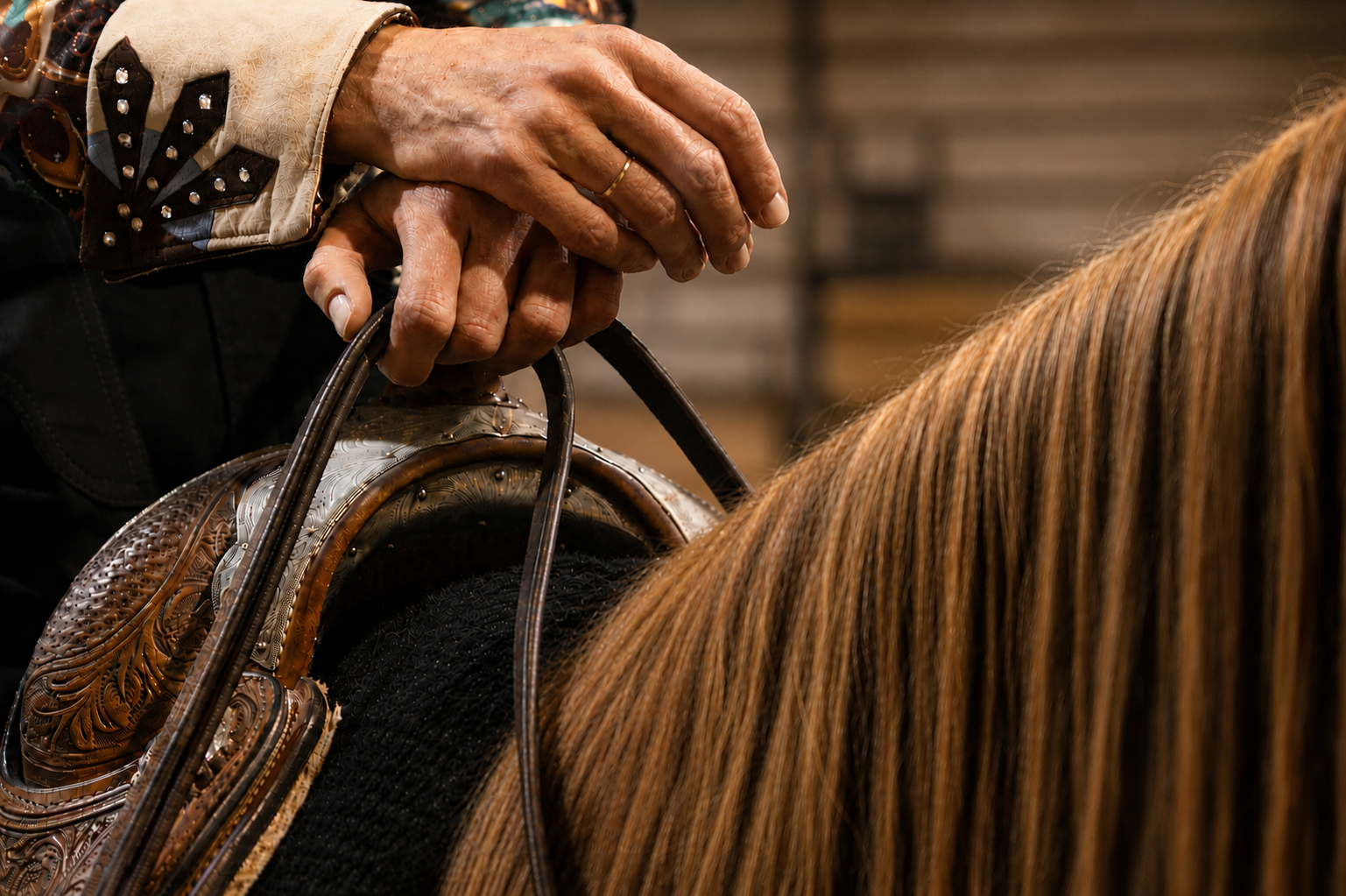
A conversation built on feel, timing, and understanding
How I Work
My work is built around one central idea: clear communication between horse and rider.
For me, working with horses isn’t about applying techniques or following a fixed system. It’s about understanding what is happening in the moment — and responding in a way the horse can understand.
Every reaction from the horse is feedback.
The real question is whether the rider can recognize it - and respond to it.
A Dialogue, Not a Method
I don’t believe in quick fixes.
When something isn’t working, I don’t look for a stronger cue or a different exercise — I look at the conversation between horse and rider.
Why is the horse responding this way?
What is the rider communicating—intentionally or unintentionally?
And how can we make that clearer?
My goal is to help riders start to see and feel what is happening, so they can adjust, rather than repeat.
Because real progress comes from understanding, not from control.
Understanding the Response
In my lessons, when something doesn’t go as planned, I always return to one question: Why is the horse responding this way?
Is the horse not understanding what is being asked? Or is the horse not physically able to do it?
In my experience, it is rarely a matter of a horse simply “not wanting to.”
Most of the time, it comes down to either a lack of clarity or a lack of physical ability.
A horse isn’t afraid of pressure itself — only of pressure that doesn’t make sense to them.
If the horse doesn’t understand, we need to be clearer — sometimes by slowing down and breaking things into smaller pieces.
If the horse isn’t able, we need to recognise that and adjust. Sometimes that means changing the training. Sometimes it means looking beyond training, at the horse’s physical comfort and well‑being.
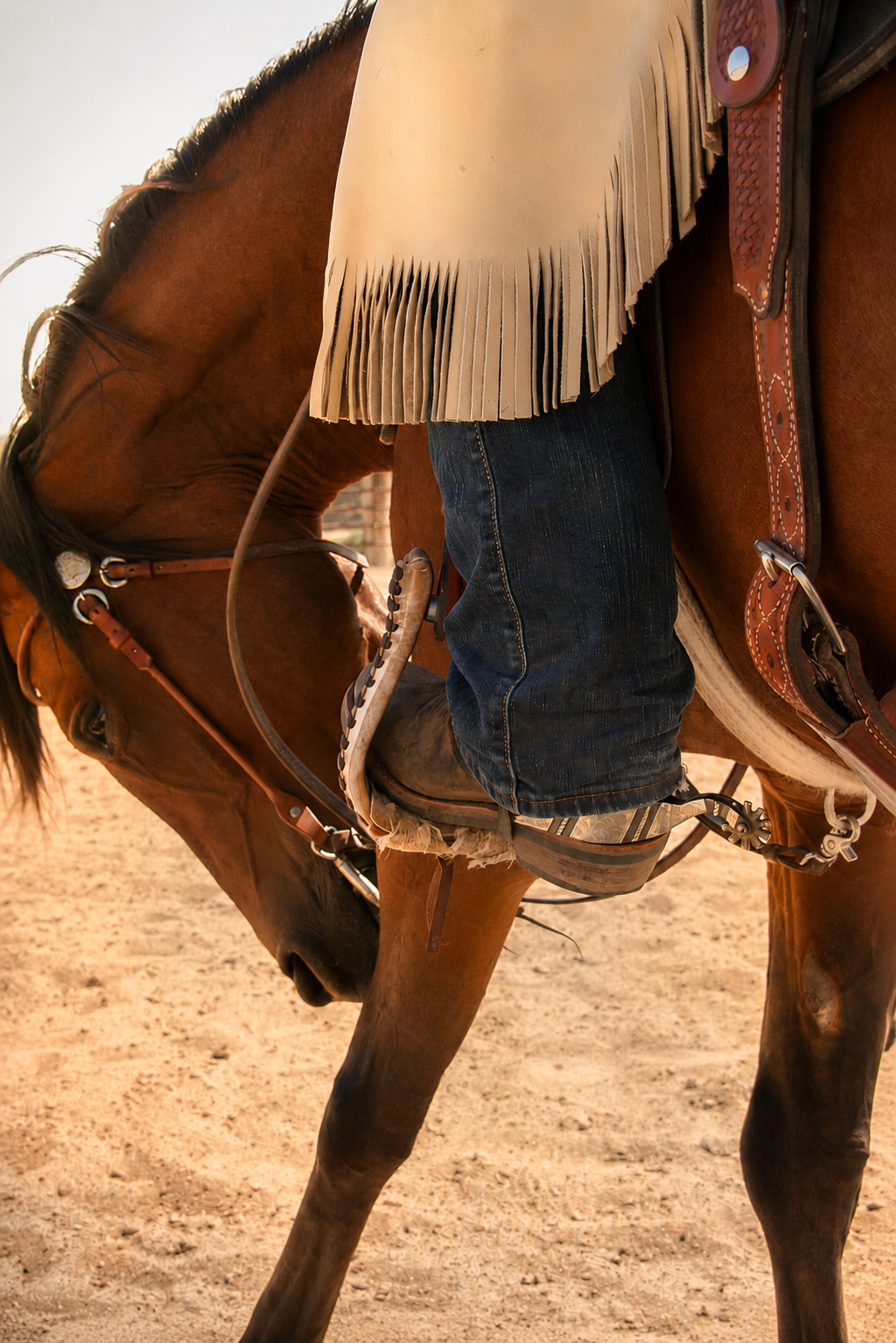
Learning to Respond
My goal is not to create riders who depend on constant instruction, but riders who can train and develop their horse themselves.
I help riders become more aware of what is happening—both in their own body and in the horse.
By developing feel, awareness, and timing, riders become clearer, more effective, and more confident.
They learn not only how to improve their horse, but also how to become better riders themselves.
Because real progress happens when riders understand not just what to do—but why they are doing it.
The Role of the Rider
Every rider is shaping their horse, whether they realize it or not.
Horses respond to timing, balance, intention, and consistency.
Small changes in posture, tension, or focus can have a big effect on how a horse reacts.
In my lessons, I focus strongly on developing the rider:
Rider awareness - becoming more conscious of your own body and timing
Effective aids - understanding how your cues influence the horse
Breaking things down - learning to create clear, manageable steps
This creates a rider who isn’t dependent on instructions, but capable of making decisions in the moment.
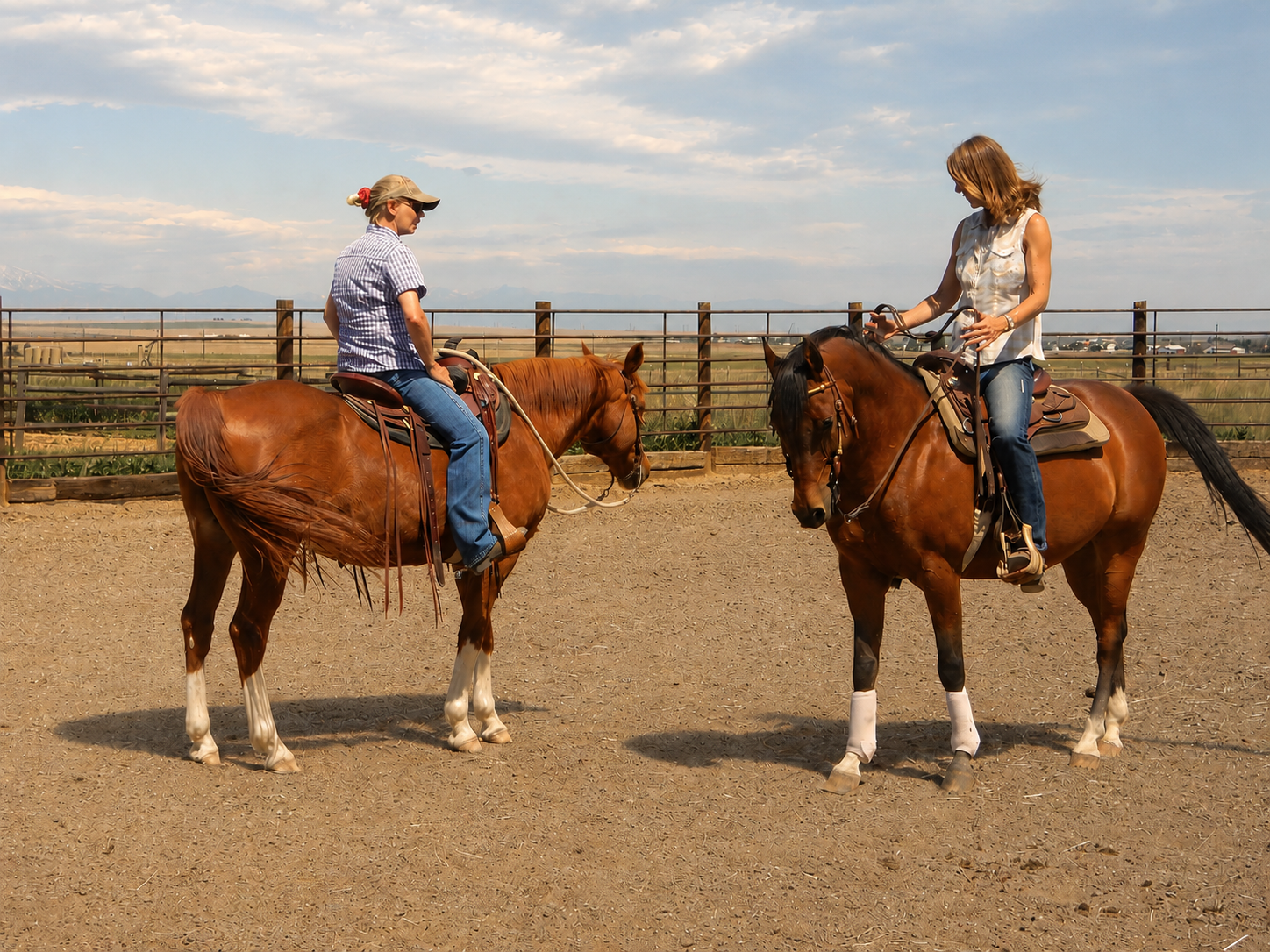
The Horse: Mental, Physical, Emotional
A horse needs to understand - but also be able to perform.
Training is never just physical.
A horse can be willing, but not physically able.
Or physically capable but mentally overwhelmed.
I work on developing the horse as a whole:
mentally relaxed and willing
physically prepared and supple
emotionally balanced and confident
A solid foundation on the ground supports everything that happens under saddle.
Foundation before Progress
Many problems don’t come from what you’re doing now—but from what was missed earlier.
Skipping steps, moving too fast, or overlooking small misunderstandings can lead to tension, resistance, or even physical issues later on.
That’s why I often go back before moving forward.
By identifying gaps in the foundation, we can rebuild clarity and create progress that actually lasts.
Long-Term, Practical Results
My goal is not just to improve your horse—but to give you the skills to continue on your own.
Not quick results, but lasting change.
A horse that understands.
A rider who knows how to respond.
And a partnership that works—not only in ideal situations, but in everyday life.
-
“She doesn’t use a one-technique-fits-all approach.”
—Arica Bores
-
“She explains things clearly and helps both horse and rider grow in confidence.”
—Teresa Danielson
-
“She breaks overwhelming issues into manageable parts.”
—Janel Opeka